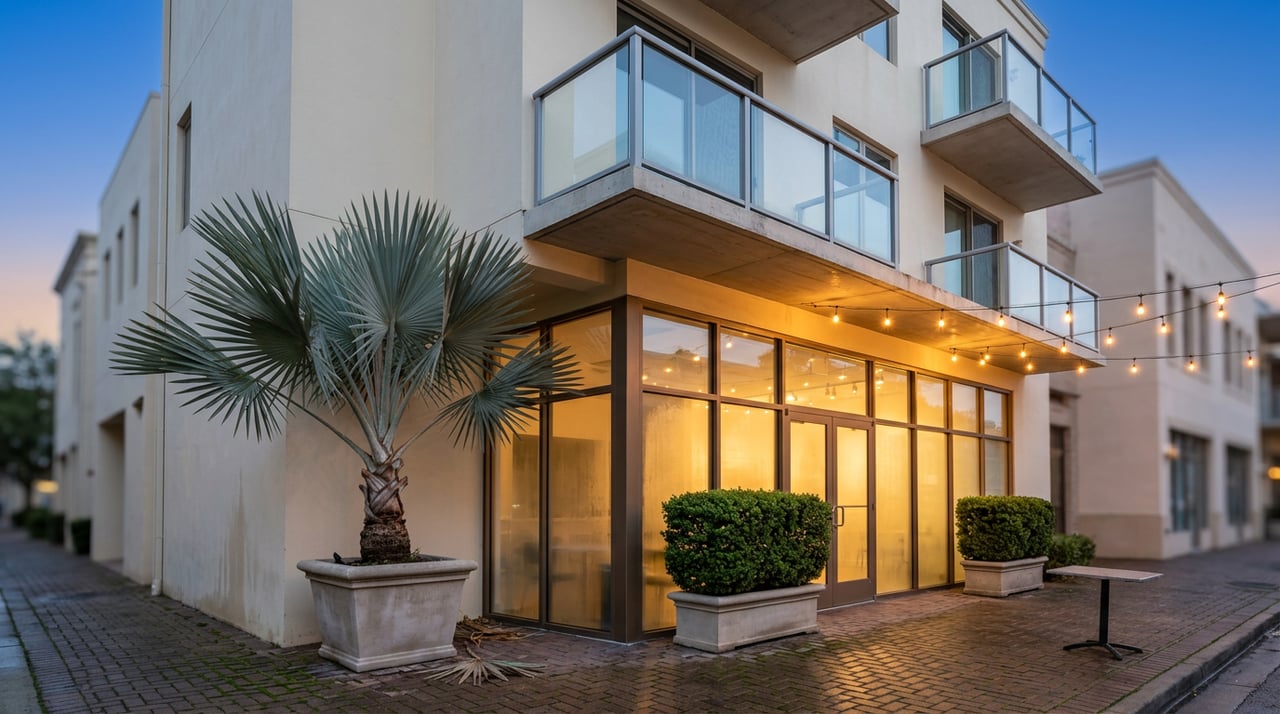

If you live near Main Street and spent the summer half-convinced the city was trying to price you off your own block, you were not imagining it. Sarasota extended paid parking enforcement to 8 a.m. to midnight, seven days a week, on July 1. By August 4, the City Commission had suspended it. Fines went up anyway, and they are staying up.
That is the version of the story most people already heard, because it played out in real time on the local news and at packed commission meetings. What almost nobody downtown is tracking is the second parking fight, the one that never got suspended because it never got a vote. It is called Main Street Complete Streets, it has been quietly working through design concepts since a public meeting at Selby Library in May, and it is the one that will actually decide how many places you can park on Main Street for the next twenty years.
The Fight Everyone Already Read About
The short version: the city's parking fund is an enterprise fund, meaning it is supposed to cover its own costs through fees and fines rather than draw from the general tax base. Parking's general manager, Broxton Harvey, told commissioners the fund was on track to lose roughly $270,000 in fiscal year 2026, with about $6.29 million in revenue against $6.56 million in expenses. The commission's fix was to widen the enforcement window and raise fines by $5 or more on most citations.
Business owners on Main Street said the timing could not have been worse. Jim Sully, who owns Patricks 1481, put it bluntly: "Everybody here is hurting on Main Street, business is down, terrible timing." Others described customers choosing University Town Center or other free-parking centers instead of dealing with meters that now ran until midnight.
"I'm spending millions of dollars trying to get people downtown, and downtown is fighting me every step of the way."
That's Catherine Hermes, who owns SRQ Med Spa, describing what the extended hours did to her business in the weeks before the city reversed course. Vice Mayor Kathy Kelley Ohlrich acknowledged the miscalculation directly: "We had the best of intentions, and we thought extending the hours and keeping the rates low would be the solution." On August 4, commissioners voted unanimously to suspend the extended hours while staff looked for another way to close the funding gap. Reprogramming the meters and swapping the signage back took city crews up to two weeks.
What Actually Changed, and What Didn't
Here is where the story gets less tidy than "it went back to normal." The enforcement hours reverted, but the fine increase did not, and the underlying budget hole that started the whole fight is still there.
| Before June 29 | July 1 to Aug 4 | Since Aug 4 | |
|---|---|---|---|
| On-street hours | 10 a.m. to 8 p.m., Mon-Sat | 8 a.m. to midnight, daily | Reverting to original hours |
| Sundays | Free | Enforcement from 1 p.m. | Free again |
| Garages | Standard hours | 24/7 | Reverting |
| Citation fines | Lower base rate | Raised by $5+ across most violations | Stays raised |
The city has scheduled a workshop to find another way to plug the gap. Nothing about the underlying math has been solved. It has only been paused.
The 10 to 12 Percent Nobody Mentions
One detail got lost in all the outrage: most of Main Street's on-street spaces were never metered in the first place. Harvey told a reporter that paid parking is only about 10-12% of our spaces that we have on street. That means the parking fight everyone had this summer, the one that dominated commission meetings and made the evening news, was fundamentally a fight over enforcement on a small fraction of the actual curb.
The city did offer one concession that got less attention: the Burns Square Lot, a few blocks off Main Street, was made free for up to three hours as a pressure valve while the enforcement debate played out. If you have been circling for a spot on a Friday night, that lot is worth knowing about regardless of what happens next with meters.
The Redesign That Isn't Waiting for Any of This
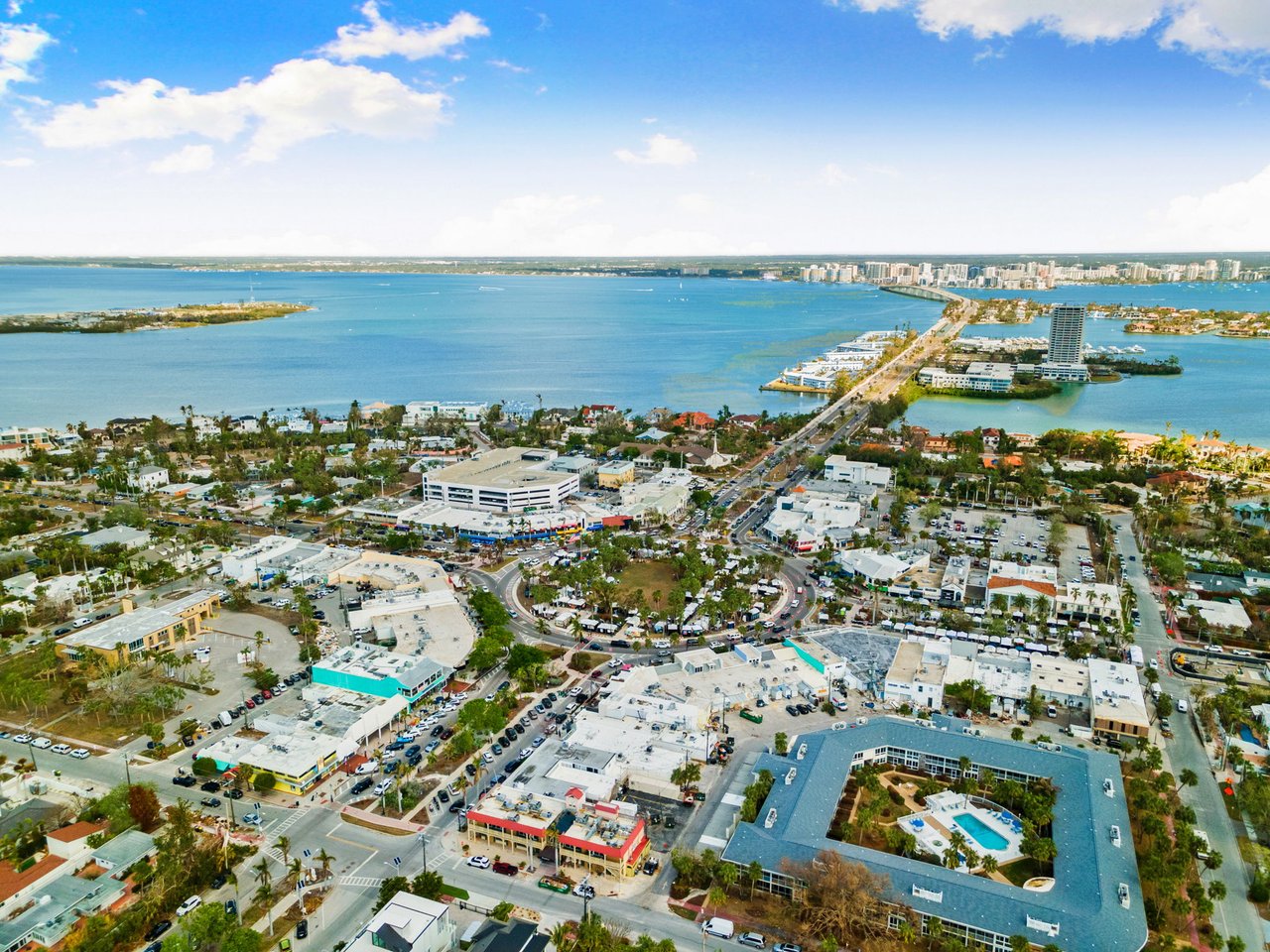
While the enforcement hours fight consumed the summer's headlines, a slower and more permanent process kept moving. Main Street Complete Streets is a redesign of the 1.2-mile stretch from U.S. 41 to School Avenue, and it has nothing to do with meter hours. It is about whether the physical curb itself gets narrower for cars and wider for people.
The city unveiled three design concepts at a May 21 public meeting: one that expands on the current streetscape, one drawing on Sarasota's early-twentieth-century architecture with arches and seat walls, and one built around the ripple patterns of the coastline. All three share a common feature that has generated far more sustained pushback than the parking-hours fight ever did: replacing angled parking with parallel parking on several blocks to make room for wider sidewalks. When the City Commission first voted to advance the project to design in 2025, Commissioner Jen Ahearn-Koch cast the lone dissenting vote, citing the potential loss of some 100 parking spaces and the impact on nearby businesses.
The project is backed by a $12 million grant plus a $3 million city match, and it is still working through design, not construction. Chief Transportation Planner Corinne Arriaga has been candid about how long these things take. Asked about the timeline, she noted that's if all things go according to plan, which we've been told really never happens. In select stretches, planners are even looking at a flush curb similar to the one already in use on Lemon Avenue, where the Saturday Farmers Market sets up every week.
That last point matters more than it sounds like it should. The market has occupied that stretch of Lemon Avenue since 1979, drawing more than 70 vendors every Saturday from 7 a.m. to 1 p.m., rain or shine. Whatever else changes on Main Street, that flush curb has already been living with foot traffic instead of parked cars for decades. The redesign is, in part, asking whether the rest of the street should look more like market day, permanently.
What This Actually Looks Like on a Saturday This Fall
None of this stopped Main Street from getting a new anchor tenant. SaraSocial opened September 15 at 1990 Main St., in the space that had been Fork & Hen on Main, with executive chef Yamzey Gonzalez making his Sarasota debut after stints at STK Steakhouse in Miami and Chaz 51 Steakhouse in Venice. The concept leans Southern coastal, with cocktails, live music, outdoor hookah, and a kitchen that stays open until 1:30 a.m. on Fridays and Saturdays, with the restaurant itself running until 2 a.m. That is a genuinely late-night operation on a street where the parking conversation, whatever its final shape, is still very much about what happens after 8 p.m.
If you are planning a fall weekend around the block, a few dates are worth putting on the calendar:
- October 2: Sunset Soundwaves kicks off the new season of Fresh Fridays on Main Street.
- October 10: ROCKtoberfest returns downtown as a fundraiser supporting the Sarasota Downtown Merchants, with proceeds going toward advertising the district and funding free community events.
- Every Saturday, year-round: The Farmers Market runs 7 a.m. to 1 p.m. at Main and Lemon, same as it has for decades.
The market will be there whether the city picks the historic-arch concept or the coastal-wave one. SaraSocial will keep serving past midnight whether or not the enforcement hours debate resurfaces at the next budget workshop. What actually determines how Main Street feels to park on and walk down for the next generation is not the fight that already made the news. It is the one still working its way through a design office, one concept rendering at a time.
If you are watching Main Street's evolution because you are thinking about property here, not just a Saturday morning walk through the market, that is exactly the kind of on-the-ground read The Real Schafers built their downtown Sarasota practice on. Tell us your story, and we will tell you what we're actually seeing on the ground.